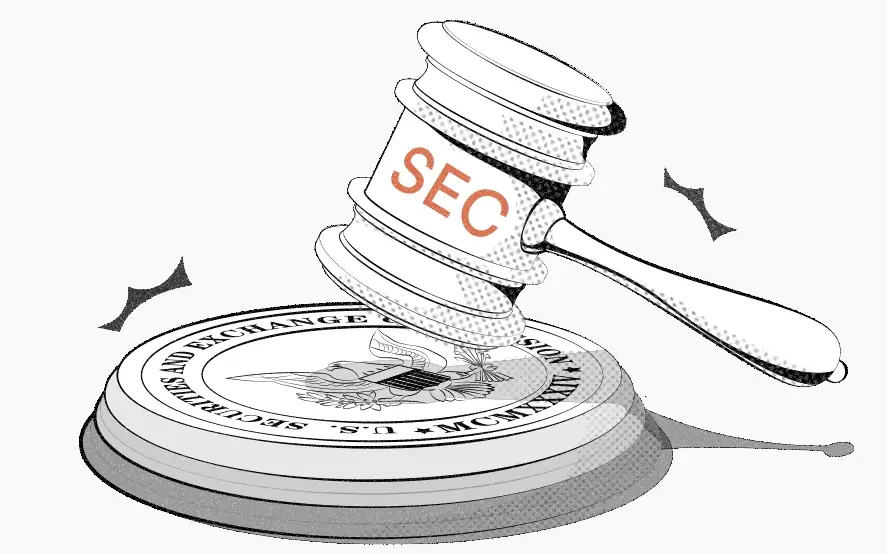
What is the US Securities and Exchange Commission?
Key takeaways
As a federal agency established by the US Congress, the Securities and Exchange Commission (SEC) is responsible for regulating the securities markets and is the top agency in the US securities industry.
The SEC was created by the passage of the Securities Act of 1933 and the Securities Exchange Act of 1934.
The commission can itself bring civil persecutions against lawbreakers, and also works with the Justice Department on criminal cases.
Understanding the SEC
The SEC is a special agency responsible for regulating the securities markets and protecting the rights and interests of investors.
The US SEC was established according to the Securities Exchange Act of 1934. Since it’s the oldest SEC in the world, we generally refer to it when talking about SEC.
Established by the US Congress, the SEC is an independent quasi-judicial agency subordinate to the federal government. It is the top agency in the US securities industry.
The SEC was created to protect investors, maintain fair, orderly, and efficient functioning of the securities markets, and facilitate inflow of household and state capital into the capital markets.
Under its influence, Thailand, the Philippines, Sri Lanka, Nigeria, Ghana, and many other countries have set up their own SECs.
History of the SEC
When the US stock market collapsed in 1929, securities issued by numerous companies became worthless. Because many had previously provided false or misleading information, the public lost confidence in the integrity of the securities markets.
To right the economy and restore confidence in the capital markets, the US Congress held hearings to search for solutions. Based on its conclusions, Congress passed the Securities Act of 1933 and the Securities Exchange Act of 1934, trying to regulate the securities markets and protect the rights and interests of investors with the two acts.
Finally, Congress established the SEC in 1934.
How the SEC works
After nearly 90 years of development, the SEC is now headquartered in Washington DC. It is headed by five commissioners appointed by the president, whose terms all last five years and one of whom is designated as chair.
According to the introduction on the official website of the SEC (https://www.sec.gov/), the commission now consists of six divisions, namely the Division of Corporate Finance, the Division of Examinations, the Division of Economic and Risk Analysis, the Division of Investment Management, the Division of Enforcement, and the Division of Trading and Markets. Under the six divisions, there’re 26 offices responsible for specific affairs including the Office of Acquisitions and the Office of Investor Education and Advocacy.
The two acts allow the SEC to pursue civil actions against wrongdoers and also work with the Justice Department on criminal cases.
As mentioned in its official website, in civil suits, the SEC seeks two main sanctions to regulate the securities markets:
1. Injunctions. A person or company that ignores an injunction is subject to fines or imprisonment for contempt.
2. Civil monetary penalties or the return of illegal profits. The SEC also reserves the right to seek a court order barring or suspending individuals from acting as corporate officers or directors, and bring proceedings including revoking or suspending registration.
In addition, the SEC has adopted its own whistleblower bounty rules. In September 2014, the SEC announced an award of over $30 million to an overseas whistleblower, the largest-ever whistleblower award by that time since the inception of the whistleblower program.
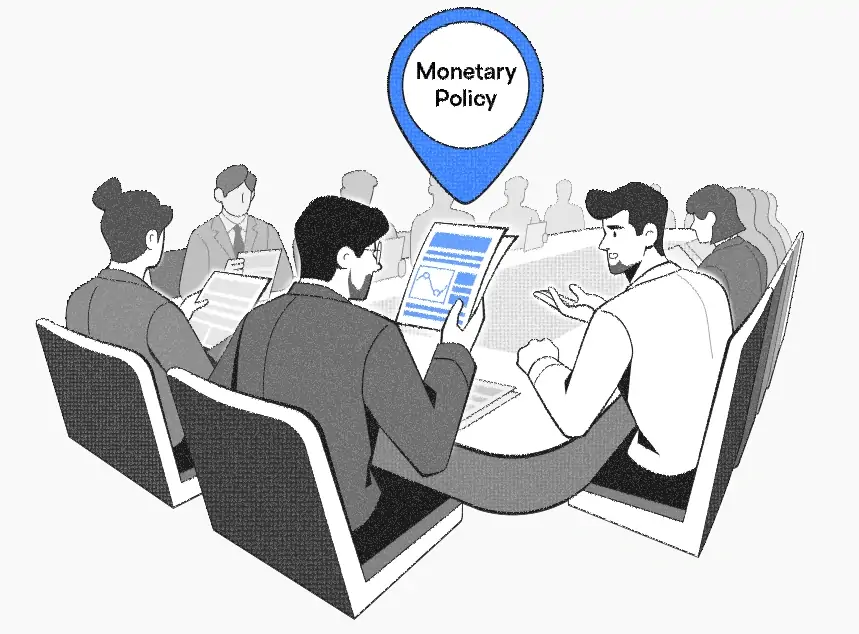
What is the Federal Open Market Committee (FOMC)?
Key takeaways
1、The Federal Open Market Committee (FOMC) is part of the Federal Reserve System of the USA and is responsible for conducting open market operations.
2、The Federal Open Market Committee holds 8 meetings in Washington every year, with the meeting results typically being the focus of Wall Street’s attention.
3、The Federal Open Market Committee is composed of 7 members of the Federal Reserve Board and 5 presidents of Federal Reserve Banks.
Concept Explanation
The Federal Open Market Committee (FOMC) is part of the Federal Reserve System of the USA and is responsible for conducting open market operations.
The FOMC holds 8 meetings in Washington every year, but in case of emergencies, they can also convene ad hoc meetings.
During the meetings, the FOMC discusses the current economic developments and forecasts for the economic outlook. All participants – 7 members of the Federal Reserve Board and 12 Federal Reserve Bank presidents – share their views on the national economic situation and discuss which monetary policy is most suitable for the current economic conditions. Finally, FOMC members with voting rights vote on the final outcome.
The FOMC meeting is held privately, therefore it receives close attention and speculation from Wall Street. The stock market usually reacts strongly to changes in monetary policy. In recent years, the Fed has publicly released the FOMC meeting minutes after each meeting.
Federal Open Market Committee members
The Federal Open Market Committee (FOMC) consists of 12 members – 7 members of the Federal Reserve Board and the President of the New York Federal Reserve Bank; the remaining 4 rotating seats are selected from the remaining 11 Federal Reserve Bank Presidents, with a one-year term of rotation.
The 11 Federal Reserve Banks are divided into 4 groups – Boston, Philadelphia, and Richmond; Cleveland and Chicago; Atlanta, St. Louis, and Dallas; Minneapolis, Kansas City, and San Francisco – each group takes turns selecting a Bank President to enter the rotating seat.
Federal Reserve Bank Presidents without voting rights can still attend FOMC meetings, participate in discussions, contribute viewpoints, and provide references for the final monetary policy decisions.
Committee members are generally classified into three types: hawks who support tightening monetary policy, doves who support stimulus plans, and moderates / centrists who fall in between the two. Generally, the Chair of the Federal Open Market Committee is also the Chair of the Federal Reserve Board.