What are opportunity costs?
Core points
opportunity cost refers to the value of a second-best choice abandoned after making the best choice.
The two prerequisites for the existence of 、opportunity cost are the multi-purpose and scarcity of resources.
in life, many of your choices have to pay the opportunity cost
Detailed explanation of concept
Opportunity cost means that people often need to do a single topic, and if they choose one of the best options, they must give up the other options, in which the value of the abandoned sub-optimal choice is the opportunity cost of this choice, also known as “alternative cost”.
As we often hear, “you can’t have both a fish and a bear’s paw”. When the money in hand is limited, if you buy a bear’s paw, you can’t afford to buy fish, then the fish you give up is the opportunity cost of this choice.
There are two main prerequisites for the existence of opportunity cost. First, resources have many uses, and second, resources are scarce. The resources here include all valuable things such as money, time, land and so on.
For example, the same amount of money can be used not only to buy stocks, but also to deposit in the bank. At the same time, money is limited and scarce, and once all is used to buy stocks, it cannot be deposited in the bank.
An example of opportunity cost
In life, you will be faced with many choices, each of which will have to pay the opportunity cost, such as:
1. You have 10,000 yuan in your hand. If you use it to buy stocks, your expected annualized return is 10%. You can also deposit it in the bank, with an annualized interest rate of 2%. If you choose to buy stocks, no matter what the stock returns are a year later, the opportunity cost of buying stocks is the bank’s annual interest, that is, 10000.2% 200 yuan.
2. You have an afternoon, which can be used not only to study investment courses in Niuniu class, but also to entertain and relax. If you choose to study, then the opportunity cost you pay is a relaxed and happy afternoon.
What are safe haven assets?
Key Points
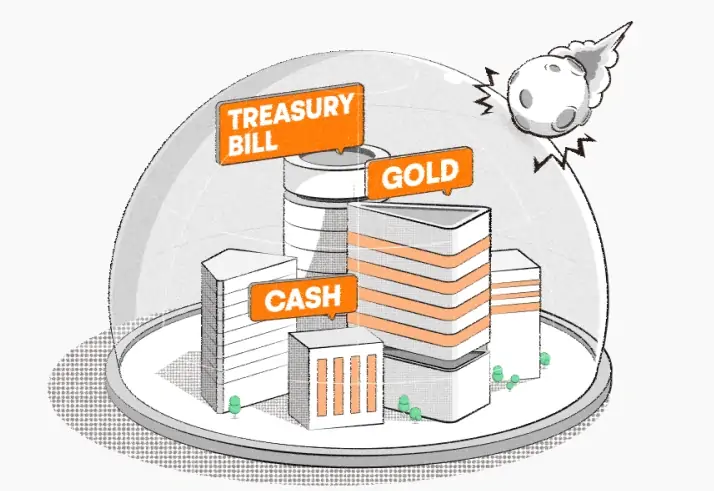
Safe-haven assets refer to a class of relatively stable assets that do not fluctuate sharply in price during market risk asset severe adjustments, and have a value-preserving function.
Common safe-haven assets include gold and other precious metals, safe-haven currencies represented by the US dollar, defensive stocks, and government bonds.
In reality, investors may need to analyze the nature and causes of each economic crisis to determine which assets have more safe-haven properties in the current market turmoil.
Concept Explanation
Safe-haven assets refer to a class of relatively stable assets that do not fluctuate sharply in price during market risk asset severe adjustments, and have a value-preserving function.
If the market is sluggish, investors will tend to invest in safe-haven assets to reduce investment risks. This article will list the 4 most common safe-haven assets, including gold and other precious metals, safe-haven currencies represented by the US dollar, defensive stocks, and government bonds.
Gold and other precious metals
Precious metals, mainly gold, are the most common safe-haven assets, with their safe-haven properties mainly relying on their recognized stability, scarcity, and the currency attributes of circulation. As physical commodities, they cannot be printed like currency, and their value usually will not be severely affected by the macroeconomic environment.
Safe-haven currencies represented by the US dollar
Safe-haven currencies mainly rely on the comprehensive strength of the issuing entity’s endorsement. For example, the safe-haven attribute of the US dollar comes from its strong economic power and global influence, and the safe-haven attribute of the Swiss franc comes from Switzerland’s independence.
Defensive stocks
Although the stock market is mainly at the center of crisis during market downturns, the stocks of specific companies perform well during turbulent times, known as ‘defensive stocks.’ Defensive stocks are mainly concentrated in utilities, healthcare, biotechnology, and consumer goods companies. Regardless of market conditions, consumers will continue to purchase food, health products, and essential housewares. Therefore, defensive stocks may exhibit relatively smaller volatility during market fluctuations.
Government bonds
The safe-haven attribute of government bonds mainly relies on the credit endorsement of the issuing entity. The more stable the issuing entity of government bonds and the stronger the credit endorsement, the lower the default probability and the stronger the safe-haven nature. For example, US Treasury bonds are recognized as one of the government bonds with strong safe-haven attributes in the global market.
A suitable allocation of safe-haven assets can effectively reduce risk in an asset portfolio, enhance the stability of the overall asset portfolio returns, and reduce volatility. However, it is important to note that the safe-haven assets mentioned above cannot guarantee stable value during every economic crisis. In reality, investors may need to specifically analyze the nature and causes of each economic crisis to determine which assets have stronger safe-haven attributes during current market turmoil.